The Color Dream
The late 80s was a time when computer chips were fully surfing Moore’s power law and pushing the technology of miniaturization. The Walkman had already made music a personal, portable experience. Brick-sized cellular phones were the domain of high-flying execs and we were all sporting our calculator watches for when we needed to impress with some on the spot mathematics.
The home video game market, having risen from the ashes of 1983, was rushing into the future in 1989 as the newest 16-bit consoles had landed in our living rooms. But gamers still dreamt of a true, coin-op arcade experience, shrunken down, and tucked into a backpack. While the Game Boy was trying to convince us that its price was worth adventuring to its monochrome landscapes, another challenger was showing us the future. This was a vibrant, powerful machine that promised full-color, hardware-scaled sprites, and a multiplayer experience that felt like pure science fiction. That challenger was the Atari Lynx, and its story is one of audacious ambition, brilliant engineering, and a heartbreaking clash with the unfeeling realities of the mass market.
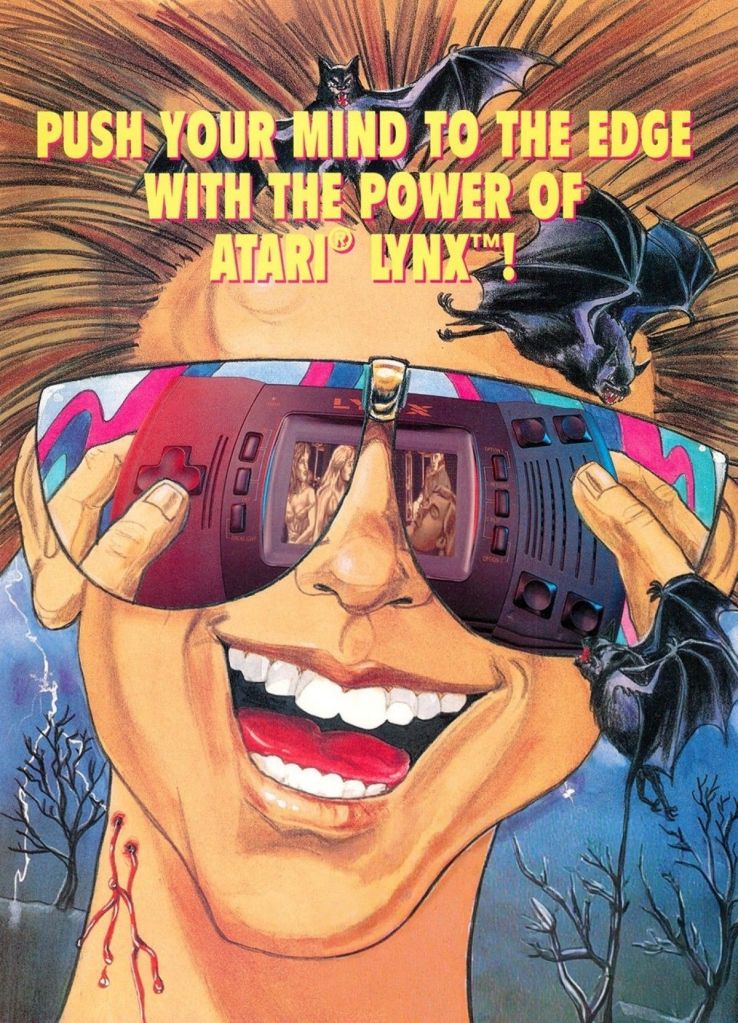
The Making of the Lynx
The Lynx didn’t begin life as an Atari product. Instead, it was born in 1988 from the brilliant minds of two ex-Amiga engineers, Dave Needle and RJ Mical, under the wing of the game publisher, Epyx. Needle and Mical were fresh from their groundbreaking work on the Amiga computer, a machine renowned for its cutting-edge graphics and sound. Now, they were looking to shrink that magic into a true 16-bit portable. This wasn’t just about making a portable, it was about making a powerful portable, one that could truly replicate the arcade experience on the go.
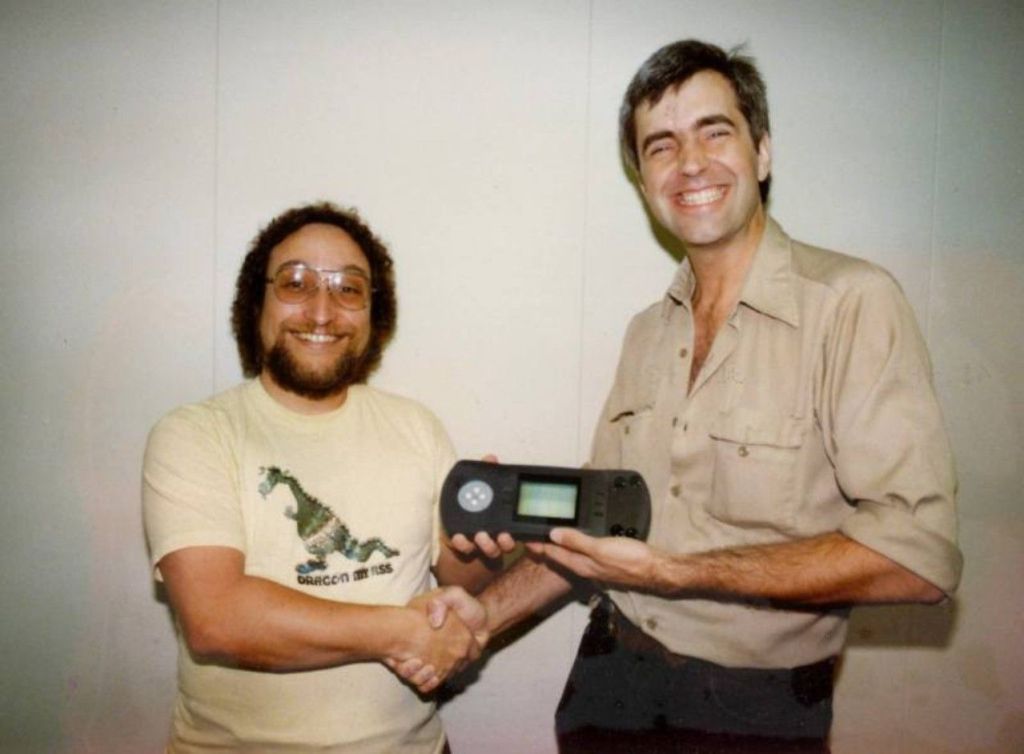
The very first demonstration of the project became the stuff of legend. In a secret demonstration, attendees were shown what they believed was an Amiga game running on a monitor. After being suitably impressed, their hosts revealed the trick that it wasn’t an Amiga at all. It was the project hardware, then just a jumble of circuit boards, wires, and electronic components, pushing those stunning, full-color visuals. It was a magnificent piece of work, a moment of genuine awe that gave a glimpse into a future that felt impossibly close.
Needle and Mical, the architects of this portable powerhouse, made some crucial design decisions that set the Lynx apart. They considered using the same powerful Motorola 68000 CPU that powered the Amiga and would soon power the Sega Genesis. But in a move that showed a surprising pragmatism for such an ambitious project, they opted for a more modest chip. The 68000 was simply too big, too expensive, and harder to program for, which would have made the final unit much larger. The real secret sauce wasn’t raw CPU power, but their custom-designed sprite engine. This was a piece of silicon wizardry, estimated to be 20 to 30 times more powerful than the Amiga’s sprite engine, and it freed up the main processor. This custom chip allowed for hardware-level sprite scaling and rotation, effects typically reserved for powerful arcade machines, to be done right on the handheld.
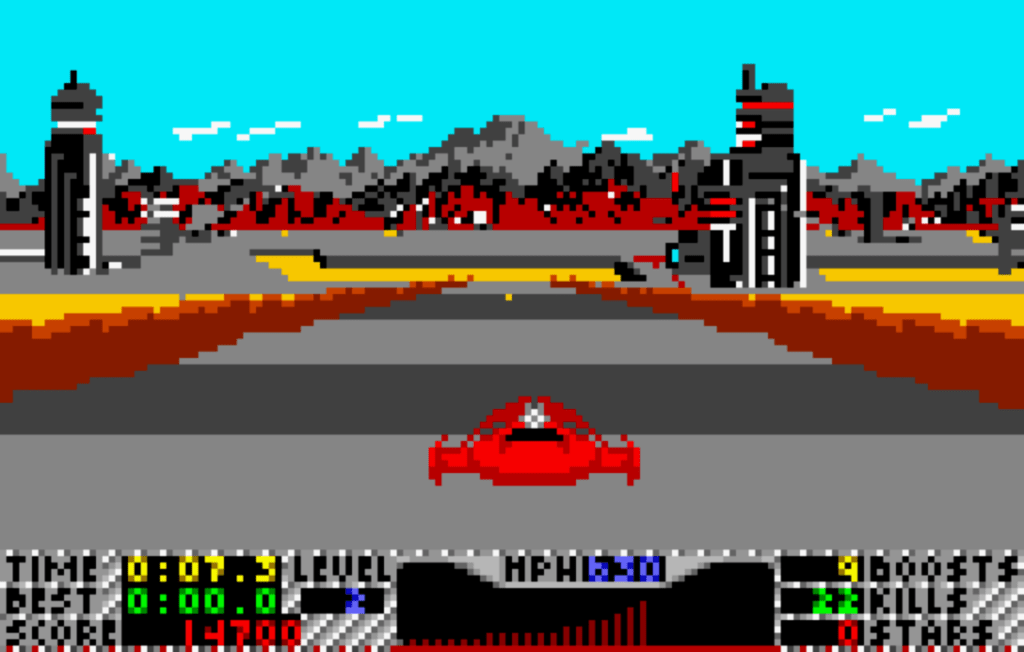
And then there was the screen. Oh, that glorious screen. While the competition was stuck using shades of green on a 2-inch screen, the Lynx boasted a 3.5-inch backlit LCD capable of displaying over 4,000 colors simultaneously from a palette of 16,384. The system’s architecture was so advanced that its designers boasted of its ability to produce a seemingly unlimited number of sprites at any given size. This was a revolutionary claim. No more sprite limits causing flicker, no more blocky characters, this was true arcade fidelity in the palm of your hand. The engineers were so proud of their work, they even boasted it could hit nearly 60 frames per second.
Their project was eventually acquired by Atari, a company eager to re-enter the console space and make a splash in the burgeoning handheld market. It was a perfect, if fleeting, marriage of cutting-edge design and an iconic brand name. The Atari Lynx was ready to redefine portable gaming.
The Arcade in Your Hand
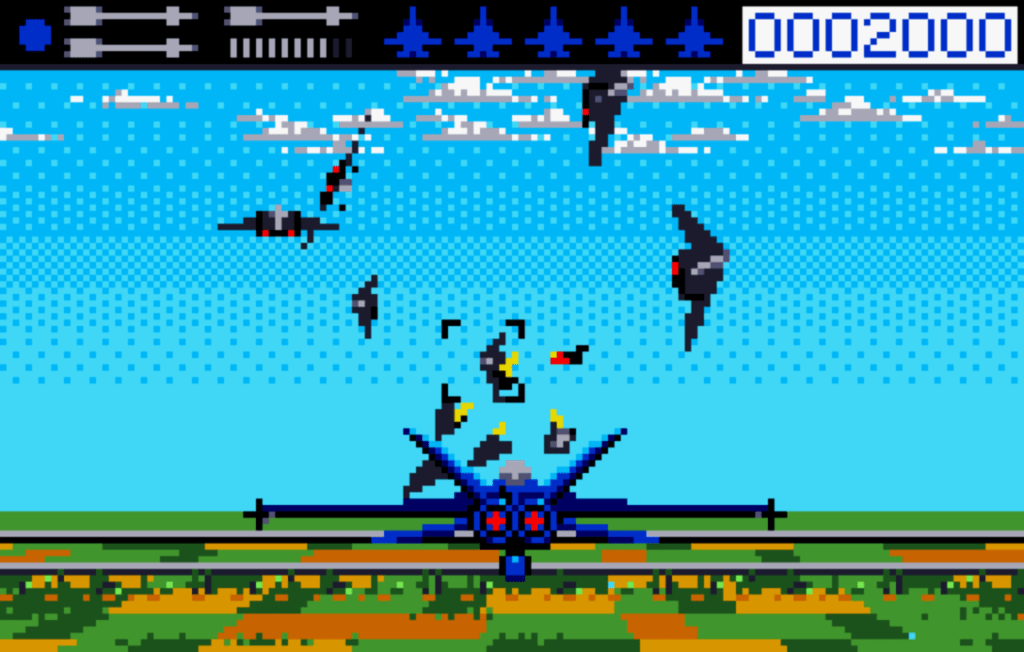
When the Atari Lynx hit shelves in September 1989, it was a statement. This wasn’t just a game system, it was a Pocket Arcade. The color was the very first impression the console made on you. For anyone who had seen the sickly green glow of the Game Boy, the Lynx’s vibrant, backlit screen was a revelation. It wasn’t just color, it was animated, scaling, rotating color. Playing Blue Lightning was an incredible experience, a flight sim that truly felt like an arcade cabinet had been transplanted onto a handheld. The shooter Gates of Zendocon, featured complex enemies and varied levels that showed off the Lynx’s graphical muscles. Even Rampage, the classic arcade brawler, felt vibrant and alive on the Lynx’s screen, a faithful port that was miles beyond what any other handheld could offer.
The hardware itself was a marvel of ergonomic design, especially for its time. It was hefty, yes, but surprisingly comfortable to hold. The designers even thought of left-handed players, a true rarity. The entire screen could be commanded to flip upside down, letting players use the D-pad and action buttons on either side. It was a small but significant detail that showed a real dedication to user experience, something often overlooked in the era of just making things work.
But beyond the obvious graphical power, the Lynx packed some truly revolutionary features that never quite got their due. Chief among them was the Comlynx port. This wasn’t just for simple two-player matchups. This was a general-purpose serial port with a hidden, ambitious potential to connect up to 8 players simultaneously from a single game cartridge! It was also designed with the flexibility to potentially connect to MIDI synthesizers or external joysticks, a clear nod to its Amiga-style open architecture. It was a feature so far ahead of its time, it’s almost heartbreaking it never fully materialized into a thriving ecosystem.

The initial launch bundle was impressive, considering the tech inside. For $149.95, a new owner received the Lynx console, a Comlynx cable, a carrying case, a power supply, and the fantastic launch game California Games. It was a premium package for a premium piece of hardware. Initial launch plans were modest but targeted, aiming for around 80,000 units in major markets like New York and Los Angeles, with a promise of 10 new games by Christmas. The hype was real, and the potential felt limitless.
David vs. Goliath
The stage was set for a battle of epic proportions. On one side, the powerful, full-color, arcade in your pocket, Atari Lynx. On the other, a small, unassuming gray brick that had Nintendo’s Game Boy. The contrast between the two machines was immediately apparent. On paper and on screen, the Lynx was far superior to the Game Boy in almost every way. It had high-tech, arcade-style capabilities that not even 16-bit home consoles like the Genesis or TurboGrafx-16 could claim. Spec-for-spec, the Lynx was the undisputed champion. It had a better screen, more colors, more powerful graphics chips, and that mind-blowing multiplayer potential. But underneath all the dazzle, the seeds of the Lynx’s struggles were already being sown.
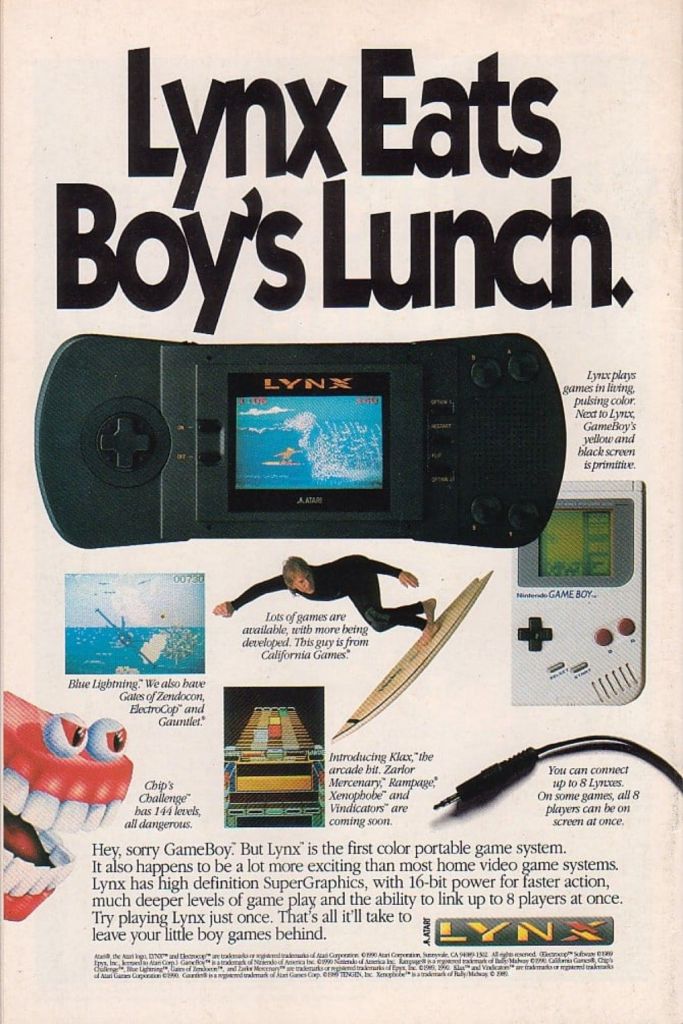
A look at the numbers revealed the first hurdle. The Lynx launched at $149.95. The Game Boy? A much more palatable $89.95. Games for the Lynx were $34.95, compared to $24.95 for Game Boy titles. In 1989, these price differences were significant, over $150 in today’s dollars, for a target market often dominated by kids, birthday money, and parent-controlled allowances.
With all the advanced tech the Lynx had going for it there would be one Achilles heel that would end up tanking the whole system. The Lynx, with its power-hungry backlit color screen and sophisticated chips, managed a paltry 5 hours on six AA batteries. On the other hand, the Game Boy, with its efficient, non-backlit monochrome display, boasted a staggering 20 hours on just four AA batteries. For a portable device, this wasn’t just a detail, it was a fundamental difference in usability. Your pocket arcade wasn’t much of an on the go arcade when it needed to be near a wall socket most of the time.
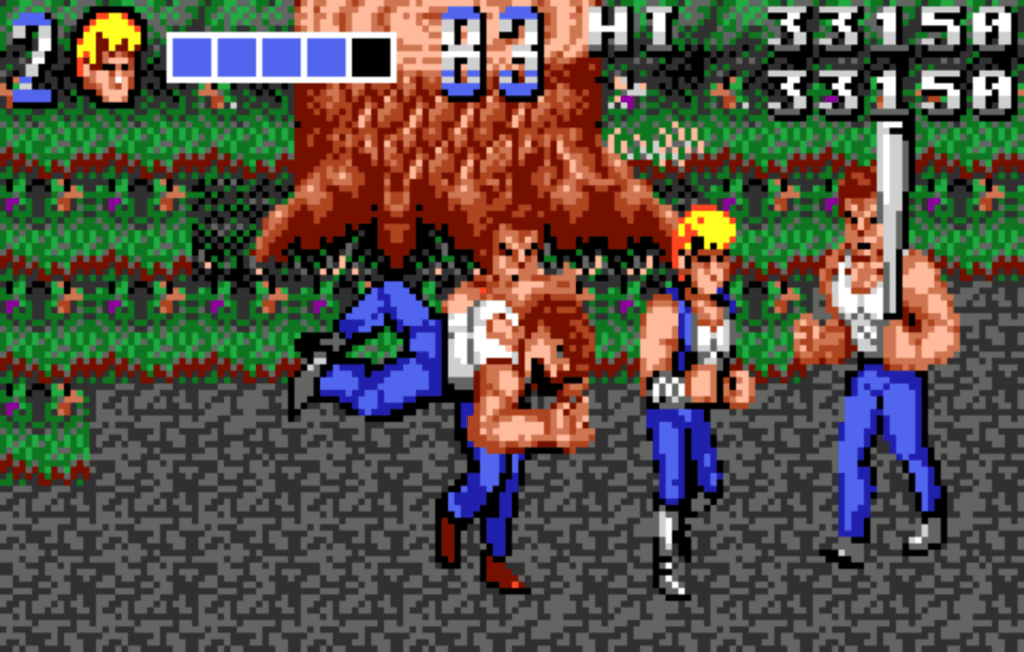
Finally, there were the games. While the Lynx boasted impressive launch titles like Blue Lightning and California Games, the Game Boy launched with an undeniable, system-selling killer app in Tetris. And with Nintendo’s iron grip on third-party developers, the Game Boy was already set to receive a torrent of iconic titles. It became clear that the war would be won by software. The Lynx might have the hot arcade properties, but the real question was who could secure the home favorites.
A Vision Ahead of its Time
The Atari Lynx was a magnificent beast, a technical marvel that pushed boundaries and gave the world a tantalizing glimpse of what handheld gaming could be. It was the handheld for the purist, the enthusiast, the gamer who prioritized cutting-edge graphics and raw power above all else. But in the upcoming war, portability, affordability, and a vast library of beloved, pick-up-and-play titles would prove to be more powerful weapons than 4,096 colors and scaled sprites.

The Lynx would fight valiantly, delivering some truly incredible games and innovative ideas throughout its life. But the market spoke, and its voice was overwhelmingly monochrome. The Atari Lynx remains a shining example of what happens when ambition outstrips practicality, a beautiful dream of a color arcade in your hand that, for a time, burned brighter than anything else. It might not have won the war, but it certainly won a permanent place in the hearts of those who remember its vibrant, impossible promise.




Leave a Reply