After the Fall of Ganon
Years had passed since the epic struggle against Ganon, King of the Gerudos. Though the darkness was pushed back, evil still lurked in the corners of Hyrule. Our hero, Link, was no longer a boy, but a young man, bearing the mark of destiny on his hand. A new crisis arose when a wicked sorcerer sought to steal the secrets of the Triforce from the wise Princess Zelda. When she refused to yield, the sorcerer retaliated with a terrible sleeping spell, plunging the princess into an enchanted slumber within the walls of North Castle.
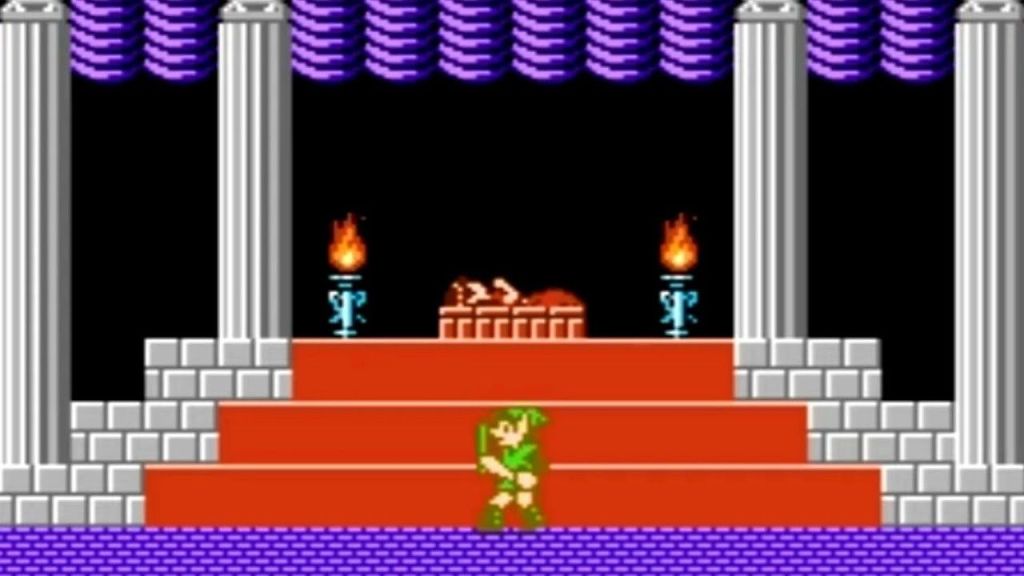
The fate of Hyrule, and the sleeping princess, now rested on Link’s shoulders once more. Legends foretold that a hero would come to break the spell, and Link, already possessing the Triforces of Wisdom and Power, knew his path was clear. His monumental task was to seek out the third and final piece of the sacred Triforce, the Triforce of Courage. Starting his journey from the very castle where Zelda lay sleeping, Link knew the trail ahead would be incredibly long and fraught with peril, but the prophecy, and the princess, called him forward.
The Hype Train Derails
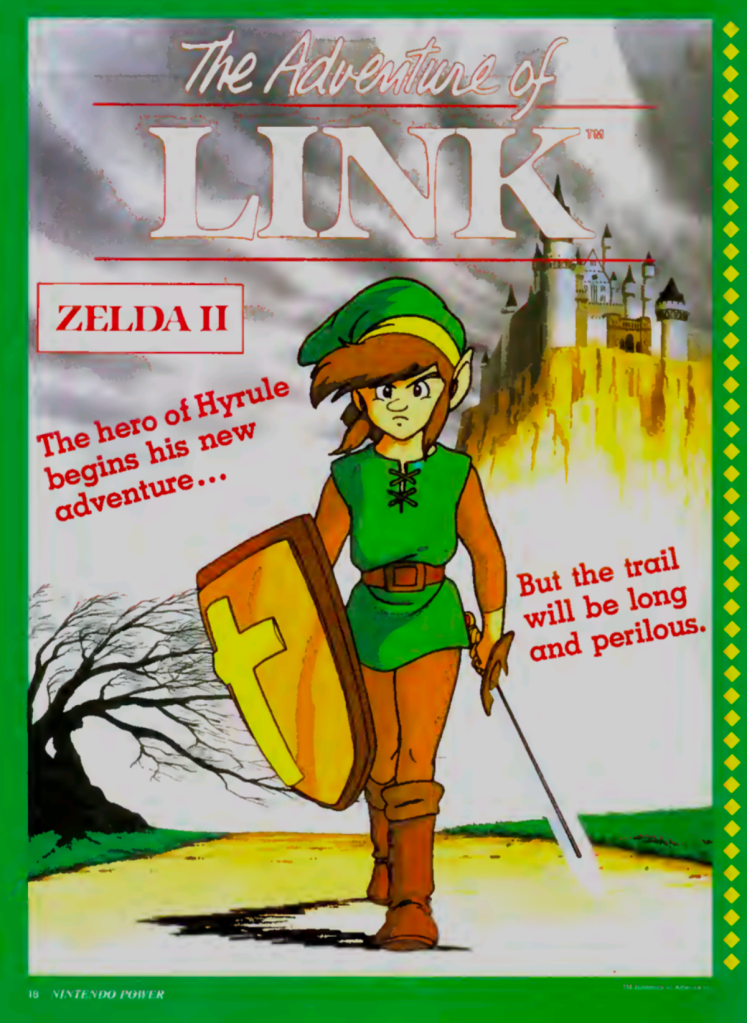
Picture the scene: it’s 1988. You’ve conquered the nine dungeons, defeated Ganon, and rescued Princess Zelda in the Legend of Zelda. The adventure was epic, the world felt vast and full of secrets, and you were hungry for more. The hype for the sequel was real, fueled by tantalizing glimpses in magazines like Nintendo Power. You’d pore over pages showing a familiar hero but in unfamiliar situations, promising that “The hero of Hyrule begins his new adventure… But the trail will be long and perilous.” This was Zelda II, and it looked different. The anticipation built, especially heading into the Christmas season, but a frustrating global chip shortage meant copies were scarce, leading to frantic searches and, for some, holiday disappointment.
Few worlds were as captivating and mysterious as the lands of Hyrule we first explored in The Legend of Zelda. But just when we thought we knew what a Hyrulean adventure felt like, Nintendo threw us a pixelated curveball with its direct sequel. While the first game was entirely top-down, Zelda II introduced a hybrid view. You navigated the expansive map of Hyrule from the classic top-down perspective, traversing roads and wilderness, exploring cities and climbing death mountain. When you entered towns, caves, palaces, or got into a random encounter with a shadowy enemy figure on the map, the game seamlessly transitioned into a side-scrolling action scene. This was where the bulk of the gameplay took place, a fundamental shift that redefined what a Zelda game could be.

Bots, Goriyas, and Lowders, Oh My!
This side-scrolling view wasn’t just for show, it enabled a completely different style of combat and platforming. Link could now attack high while standing or low while crouching, and his shield would automatically block incoming projectiles or attacks based on his stance. This required timing, positioning, and learning enemy patterns. You could also learn powerful new sword techniques from hidden swordsmen. This was a far cry from the simpler, direct combat of the first game and demanded a new level of skill.
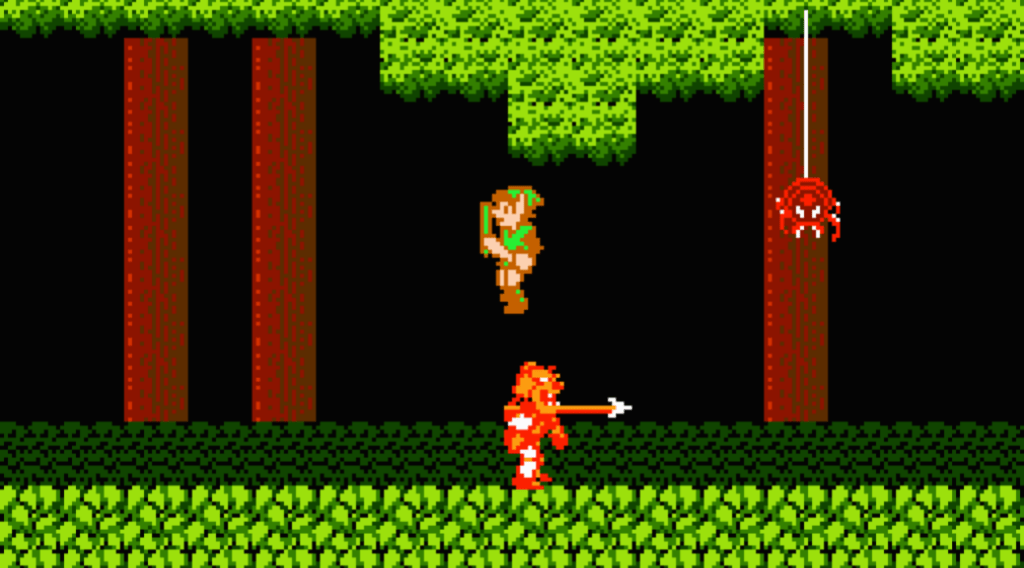
As the Nintendo Power vividly illustrated “servants of Ganon have invaded!”, Zelda II threw a diverse and often frustrating array of foes at you in those side-scrolling segments. You’d encounter everything from simple jumping Bots and thread-dropping Deelers to more challenging enemies like the boomerang-wielding Goriyas, the axe-throwing Dairas (whose attacks your shield couldn’t block!), and the life-gobbling Lowders. You had to learn their patterns, their weaknesses (like the Geldarm’s vulnerable head or the Myu being weak on top), and how to use your high/low attacks and blocks effectively. Even familiar foes like the Moblin returned, their strength visibly indicated by their changing color and appearance (Weak, Normal, Strong). The skies weren’t safe either, with flying pests like Ache and Acheman, and the bridges guarded by vicious, rock-spitting Bago-Bagos. This demanding bestiary contributed significantly to the game’s notorious difficulty.
Hyrule’s Wild RPG Turn
Zelda II also embraced robust RPG mechanics in a way the original only hinted at. Defeating the servants of Ganon earned Link XP. Finding Treasure Bags also granted XP. Accumulating enough XP allowed you to level up, boosting one of three stats: Attack (increasing sword damage), Magic (reducing spell costs), or Life (increasing your health). This internal character progression was a major departure from the first game’s item-based power-ups.
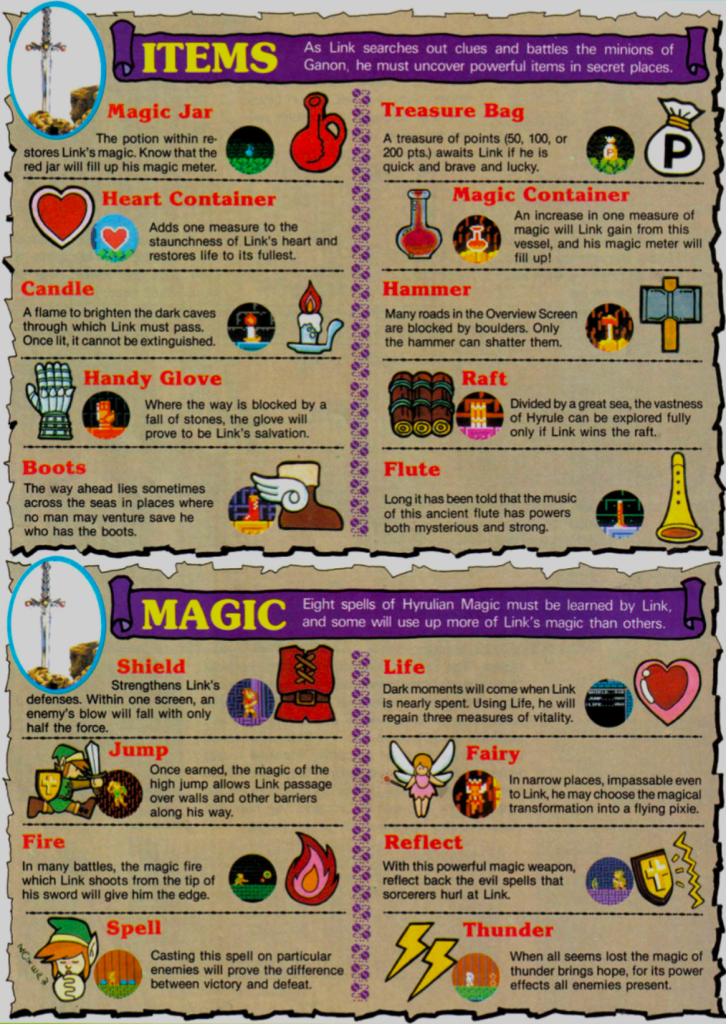
Adding to the RPG depth was a dedicated Magic system. Link had a Magic Meter and could learn eight distinct spells from Wise Men in towns. These spells were crucial for survival and progression. Spells like Jump increased jump height, opening up new areas, while Fairy turned you into a flying pixie to squeeze through tight spots, Spell had special effects on certain enemies, while the screen-clearing Thunder was one of the most powerful finishers. You also found Magic Jars to refill your meter and Magic Containers to increase its maximum size, alongside familiar Heart Containers. Other new items like the Candle, Handy Glove, Boots, Hammer, and Flute were essential tools for overcoming specific environmental obstacles in the world.
And survival was a constant concern, thanks to Zelda II’s notorious difficulty and its finite lives system. You started with just three lives. Losing a life meant restarting the current screen or area. But running out of lives resulted in a “Game Over,” sending you all the way back to the North Castle. While the NES version mercifully let you keep your levels, items, and spells, you lost all the XP you’d accumulated towards your next level-up, a cruel twist that made grinding feel risky. Some enemies could even drain your XP with their attacks! This punishing system, combined with demanding combat and tricky platforming over lava pits and other hazards, cemented Zelda II’s reputation as one of the toughest games on the NES.
Early Triumphs in Hyrule
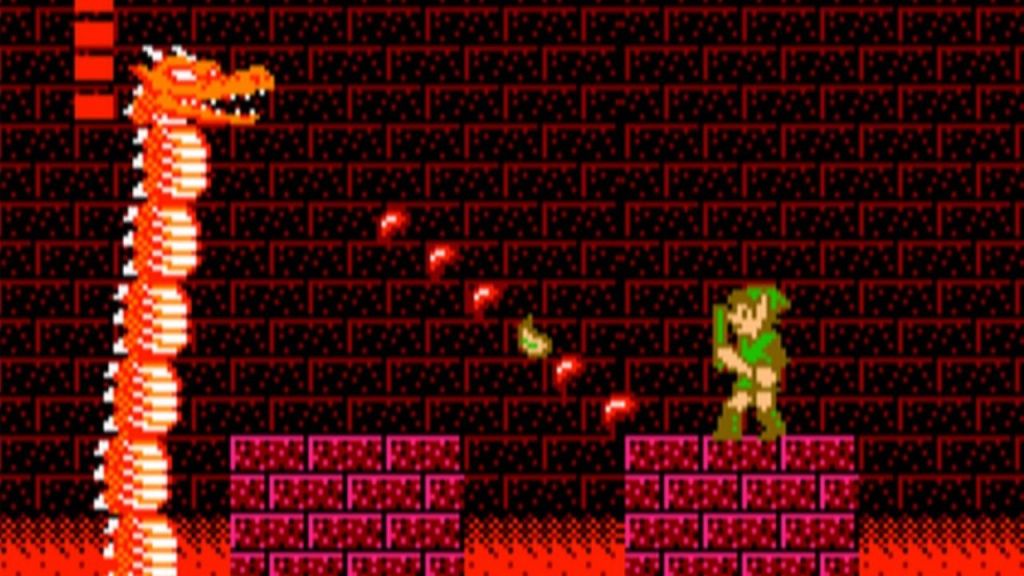
The early stages of Link’s adventure are marked by a series of memorable highlights that immediately draw the player into the perils and triumphs of Hyrule. A standout moment is the initial confrontation with Horsehead in Parapa Palace. This formidable centaur-knight, wielding a massive club, serves as an early test of skill and strategy. The satisfaction of finally overcoming this imposing foe, through careful observation of attack patterns and well-timed strikes, provides a rewarding introduction to the challenges that lie ahead. Furthermore, the intricate exploration of Parapa Palace, with its hidden keys and interconnected chambers, emphasizes the importance of thoroughness and rewards players with a tangible sense of progression as they unlock new areas.
Venturing into the murky depths of Midoro Swamp Palace introduces a contrasting environment and a pivotal item: the Power Glove. The acquisition of this powerful tool fundamentally changes the landscape, allowing Link to overcome previously insurmountable obstacles by smashing through rocks and revealing hidden pathways. This moment of empowerment, coupled with the strategic encounters with enemies like the boomerang-wielding Goriya, underscores the game’s blend of combat and environmental puzzle-solving. The unexpected and dramatic entry into the Island Palace, via a fall from the King’s Tomb, injects an element of surprise and immediately establishes a unique atmosphere for this new segment of the journey, signaling that the adventure is full of unpredictable twists and turns.
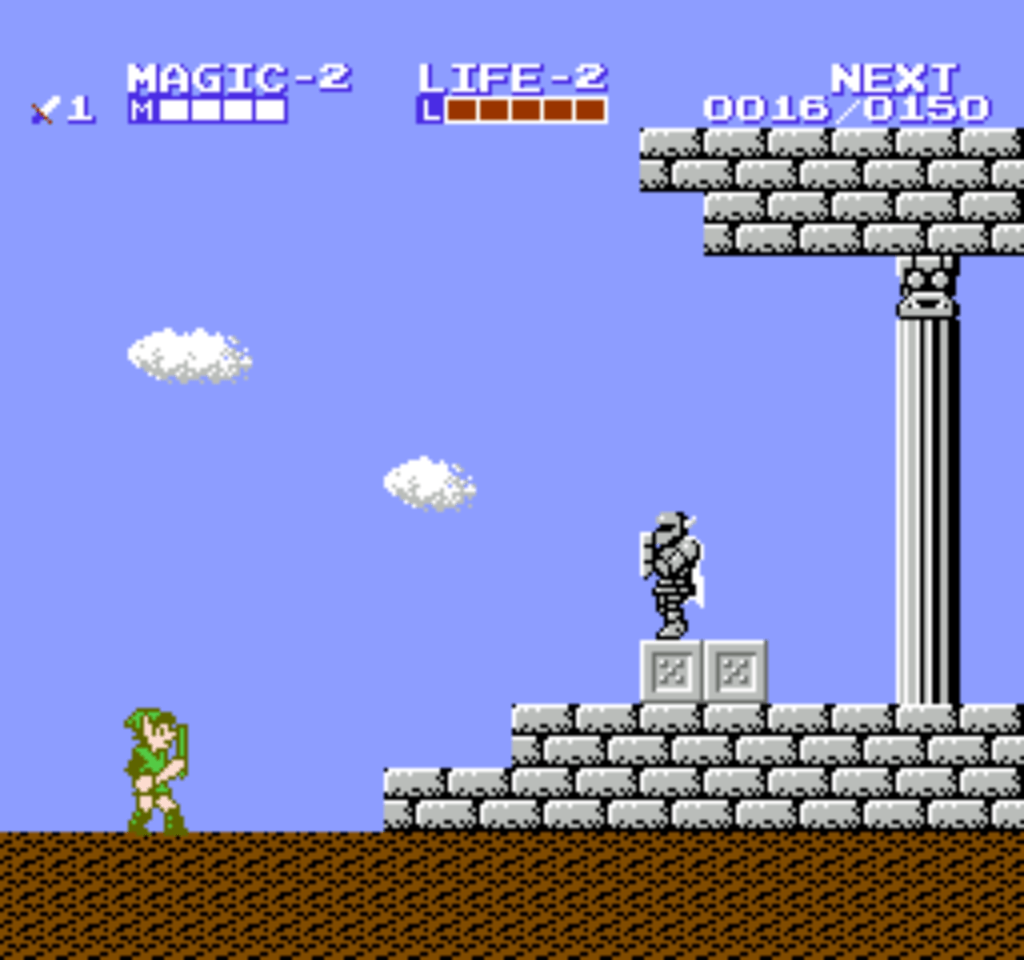
The Palace of Maze Island further exemplifies the early highlights through its focus on intellectual challenges. The encounter with the spell-casting wizards necessitates a clever utilization of the Reflect Shield, requiring players to deduce the specific tactic of crouching to effectively counter their magic. This puzzle-like combat scenario underscores the game’s depth beyond simple hack-and-slash mechanics, rewarding players for their ingenuity and observation skills. These early palaces, each with their distinct themes, guardians, and pivotal item acquisitions, collectively create a compelling and engaging introduction to Link’s quest, setting the stage for the grander challenges that await and establishing the core gameplay elements that define this classic adventure.
Nintendo Cooks Up an Odd Sequel
Despite its radical departure, Zelda II was a commercial success and received considerable acclaim at the time, even winning Nintendo Power’s Game of the Year in 1988. Critics praised its innovation and depth, particularly the RPG elements and challenging combat. However, the difficulty and the stark difference from the original also drew criticism, foreshadowing its eventual status as the odd entry of the series.
Ultimately, Zelda II’s core deviations – the primary side-scrolling perspective, the leveling, the finite lives – were not carried forward in subsequent main series titles, which returned to the top-down formula established by the first game. Yet, The Adventure of Link wasn’t without its lasting impact. It introduced elements that did become series staples, such as the Magic Meter, foundational spells like Life and Shield, more interactive towns filled with NPCs offering clues, and the iconic antagonist Dark Link.

Zelda II: The Adventure of Link is a fascinating entry in the Zelda saga. It’s challenging, sometimes frustrating, and undeniably different. But it was also a bold experiment from an era where sequels weren’t afraid to completely reinvent the wheel. It offered a unique flavour of Hyrulian adventure that, while not universally loved, is still appreciated by those who braved its perilous path. It stands as a testament to Nintendo’s willingness to take risks and remains a memorable, if demanding, chapter in the adventures of Link on the NES.
 PlayZine
Leave a comment