Whatcha Gonna Do When Hulkamania Runs Wild on You!!
It’s the late 1980s and prime-time evenings are dominated by the spectacle of the World Wrestling Federation. This wasn’t just wrestling, it was a universe populated by living cartoons, muscle-bound superheroes clashing with dastardly villains in epic confrontations fueled by grudges, betrayal, and gloriously over-the-top promos. Catchphrases became playground currency, and the larger-than-life personalities felt like modern myths.
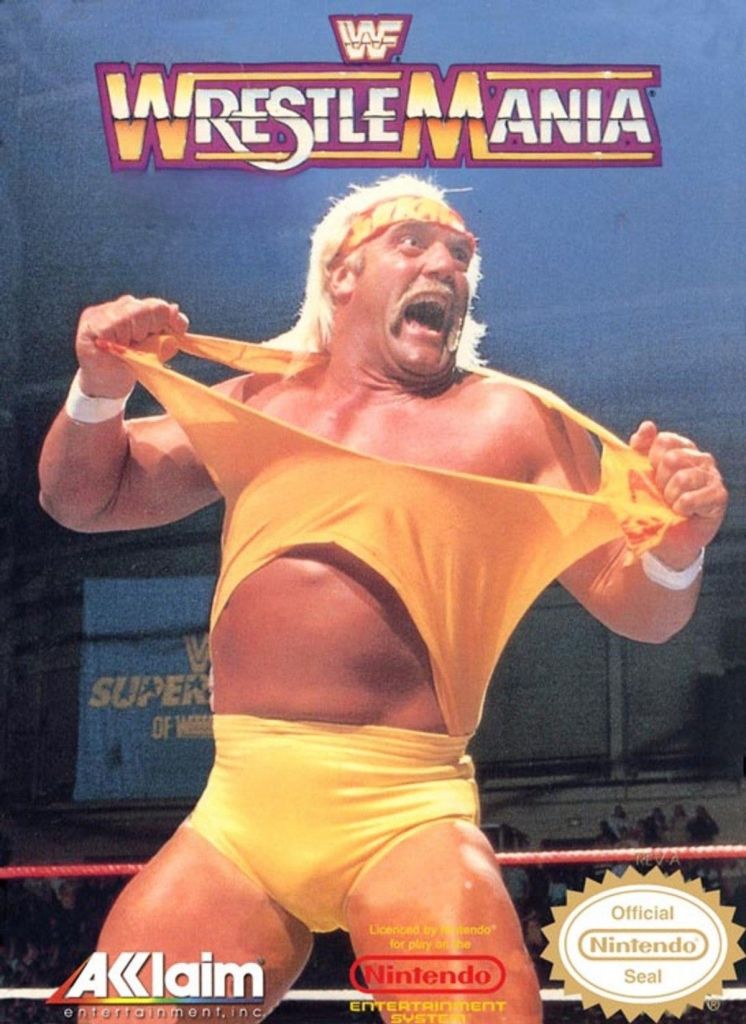
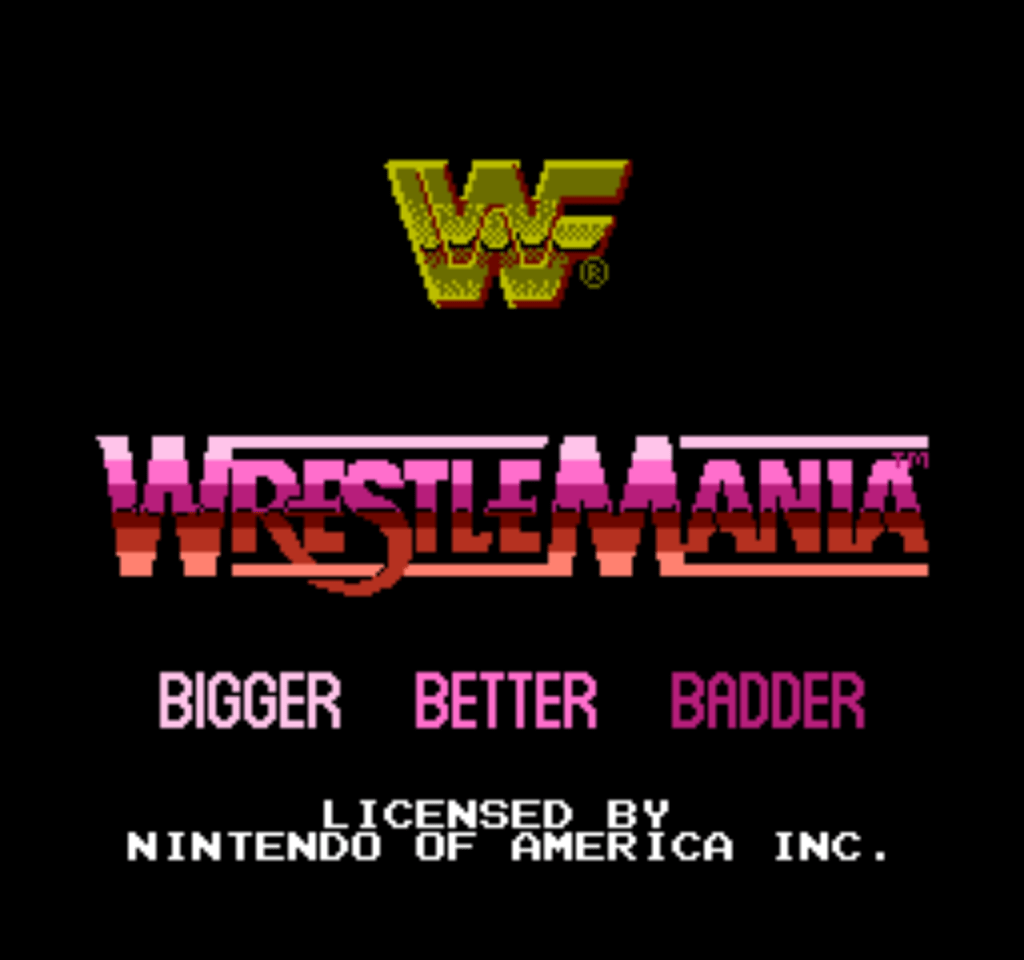
Then, in the cold month of February 1989, two cultural juggernauts collided with the force of a Hulk Hogan leg drop. The WWF, at the zenith of its Golden Era, slammed onto the landscape of the undisputed king of home entertainment: the Nintendo Entertainment System. The game was simply titled WrestleMania, its loading screen proudly proclaiming the tagline borrowed from the legendary WrestleMania III: “Bigger. Better. Badder.” The hype was real. Finally, we could be Hulk Hogan, be Macho Man, right in our own living rooms!
Vince’s Vision: The Man Who Dreamed of a Wrestling Empire
The WWF’s transformation from a regional wrestling promotion into a global entertainment empire in the 80s was nothing short of revolutionary, orchestrated by the ambitious vision of Vince McMahon. Snapping up the company from his father in 1982, McMahon wasn’t content with the old ways. He saw a fragmented landscape of “wrestling fiefdoms,” as he put it, and aimed to bulldoze them, creating one unified kingdom under the WWF banner.

It was a high-risk gamble, pushing the company financially, but McMahon wasn’t playing for small stakes. Recognizing the power of cable TV, he forged partnerships with the Networks, bringing WWF action into millions of homes weekly. He pioneered the pay-per-view model for major events, starting with the first WrestleMania, turning mega-shows like WrestleMania III into colossal revenue generators.
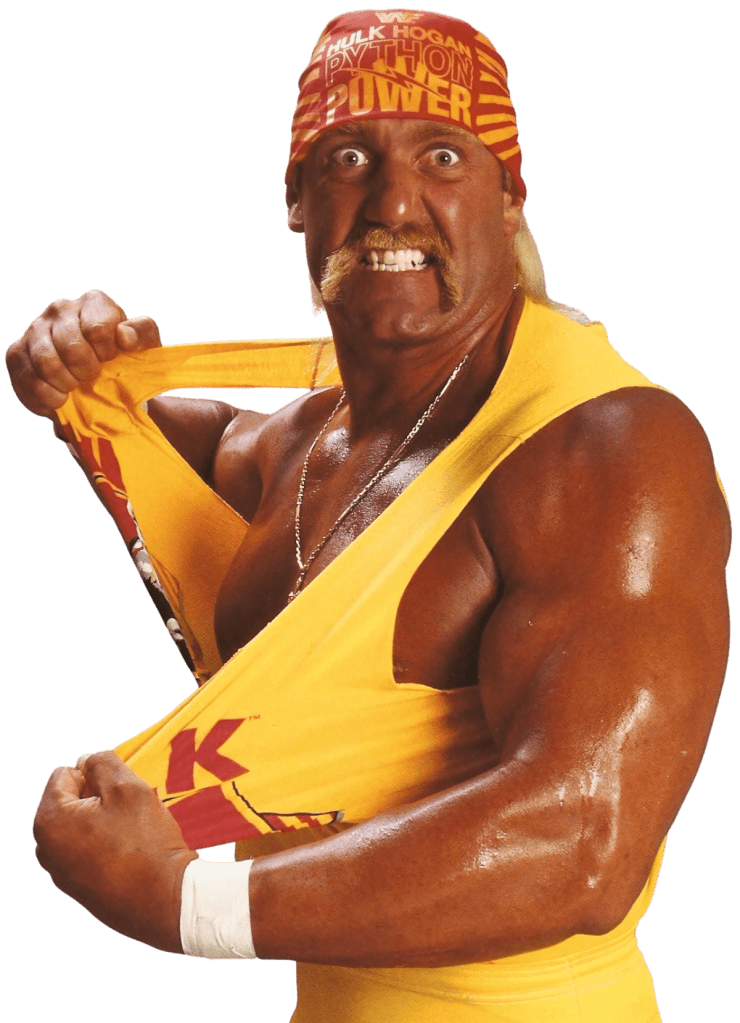
And at the heart of it all, bathed in yellow and red, stood one man: Hulk Hogan. Hogan was the perfect avatar for this new era. Defeating The Iron Sheik in 1984 to win the WWF Championship ignited Hulkamania. With his undeniable charisma, superhero physique, and wholesome message (“Train, say your prayers and eat your vitamins!”), Hogan became more than a wrestler, he was a cultural icon, a real-life action figure. His connection with kids was electric, driving merchandise sales and selling out arenas across the country. He was the sun around which the WWF universe revolved.
Gods Among Men: The Larger-Than-Life Roster
The WWF WrestleMania NES game immortalized a core slice of the Federation’s vibrant Golden Era roster, led by the ultimate good guy Hulk Hogan. Alongside him stood the legendary Andre the Giant, the ‘Eighth Wonder of the World’. Adding a whirlwind of unpredictable intensity was ‘Macho Man’ Randy Savage, a charismatic spectacle of colourful robes, gravelly ‘Ooooh yeahs’. Providing the perfect villainous counterpoint was ‘The Million Dollar Man’ Ted DiBiase, the cackling embodiment of 80s greed who believed everyone had a price. Rounding out this eclectic group were Bam Bam Bigelow and the Honky Tonk Man.
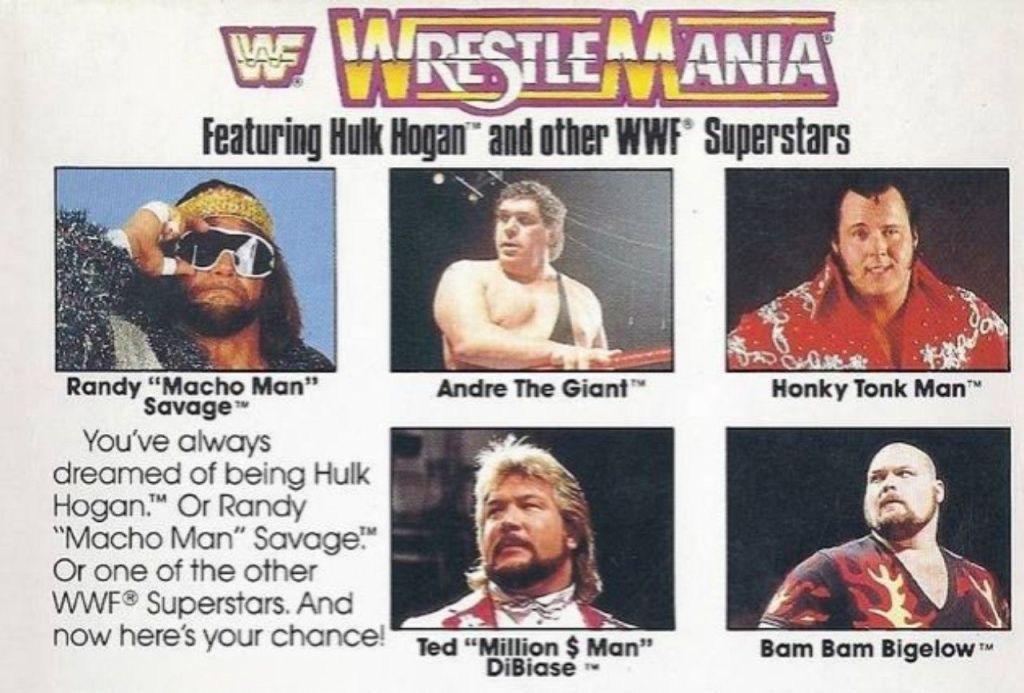
Seeing this lineup selectable on the character screen was, for countless young fans, a genuinely thrilling moment. After religiously watching these larger-than-life figures dominate television and excitedly flipping through magazine previews, the chance to finally step into their pixelated boots was pure 8-bit magic. The simple act of choosing Hulk Hogan or Randy Savage felt like wielding real power, instantly transporting you from the living room carpet straight into the electric atmosphere of the WWF, ready to take on the world.
The Bodyslam Heard ‘Round the World
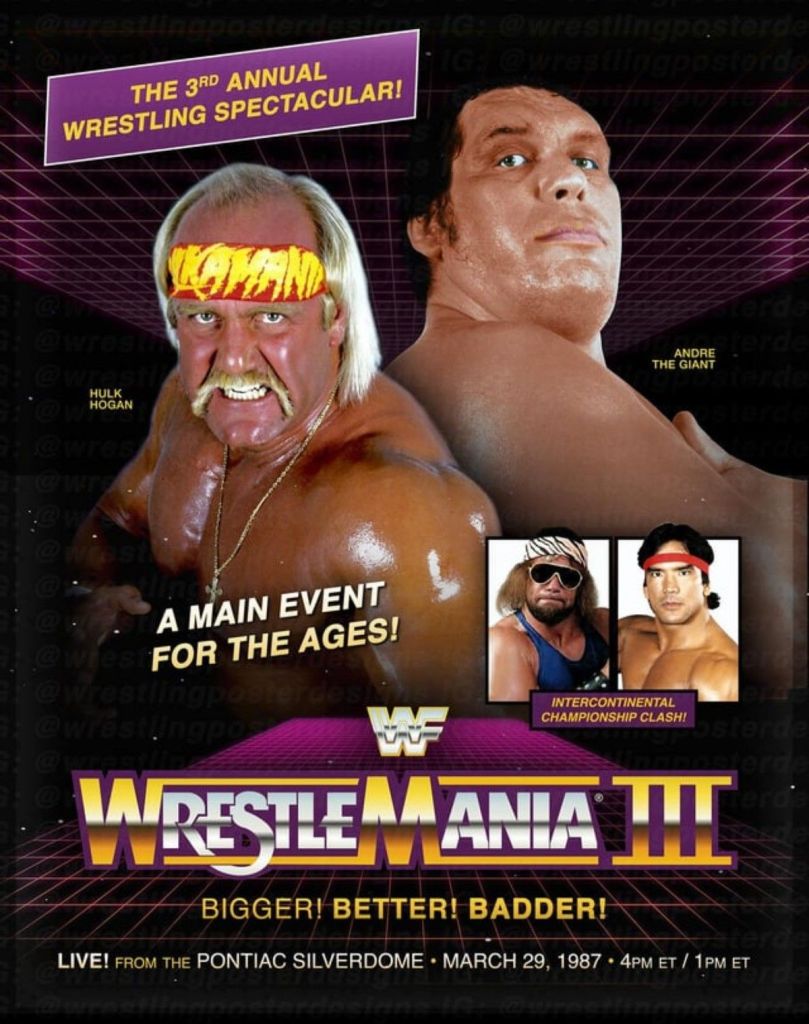
The Golden Era wasn’t just about colourful characters, it was about the epic stories they told. WrestleMania III, held in the cavernous Pontiac Silverdome in 1987, remains the symbolic peak. The main event saw Hulk Hogan defend his title against his former friend, the seemingly unstoppable Andre the Giant. The build-up was masterful – Andre’s jealousy, his shocking turn to the dark side alongside manager Bobby Heenan, the iconic confrontation on Piper’s Pit where Andre ripped Hogan’s shirt and crucifix.
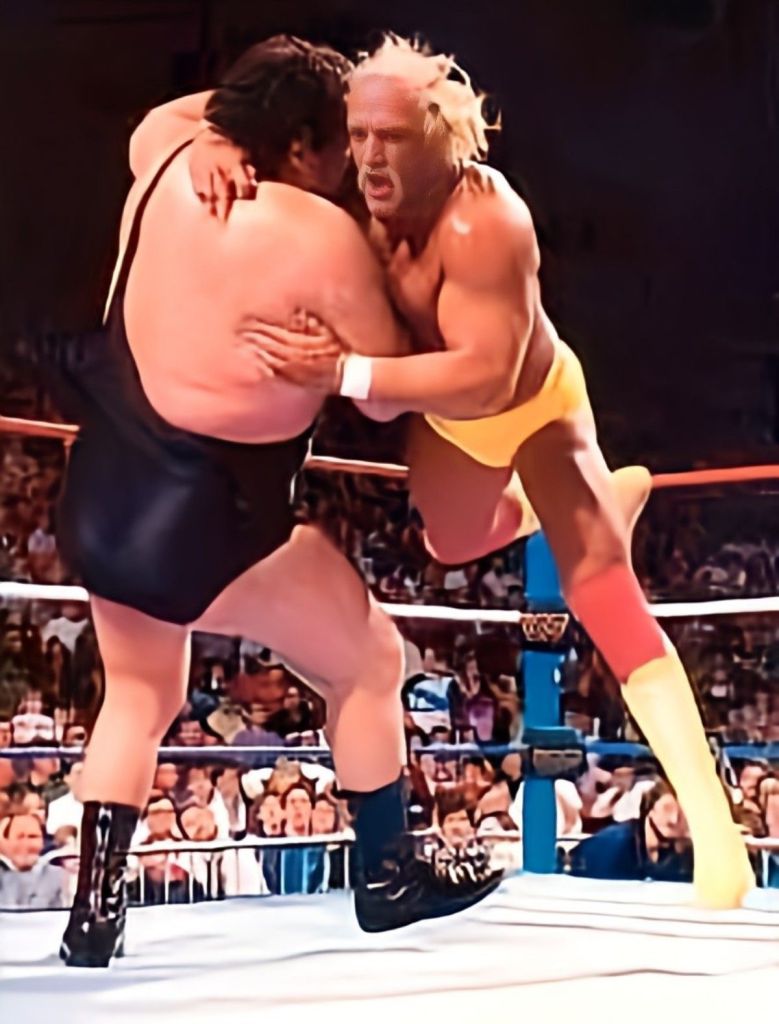
The match itself delivered the defining image of the era: Hogan summoning superhuman strength to bodyslam the 500-pound Andre, a moment etched into wrestling history. While the Savage vs. Steamboat Intercontinental title match on the undercard was a technical wrestling clinic, Hogan vs. Andre was pure spectacle, proof that the WWF had conquered the mainstream. It was high drama, perfectly setting the stage for their championship clash at WrestleMania V. This long-term storytelling, full of betrayal and jealousy, kept fans utterly hooked.
WWF Hype meets 8-bit Reality
It was into this white-hot atmosphere that the WrestleMania cartridge landed. Seeing that box art, featuring Hogan mid-pose, was enough to make any kid’s heart race. Finally! We could settle playground disputes: Could Macho Man really beat Hogan? Could anyone body slam Andre? Popping that grey rectangle into the NES felt momentous.
And the game itself? Well, it was certainly a video game. You’d pick your wrestler – probably Hogan first, let’s be real – and enter the blocky, empty arena. The controls were straightforward. Mash ‘A’ for a punch (or headbutt, or swipe), mash ‘B’ for a kick (or maybe an eye gouge, if you were DiBiase). Running moves involved getting a head of steam and pressing a button. Maybe, if you were lucky and playing as Savage or Hogan, you could climb the bottom turnbuckle for a flying elbow or leg drop! Then there were the power-ups. Randomly, an icon would float across the screen – Andre’s giant footprint, DiBiase’s dollar sign, Savage’s shades, Honky Tonk Man’s guitar, Bam Bam’s flames, or Hogan’s golden cross. Only the corresponding wrestler could grab it for a vital health boost. It made little sense, but hey, it was something!
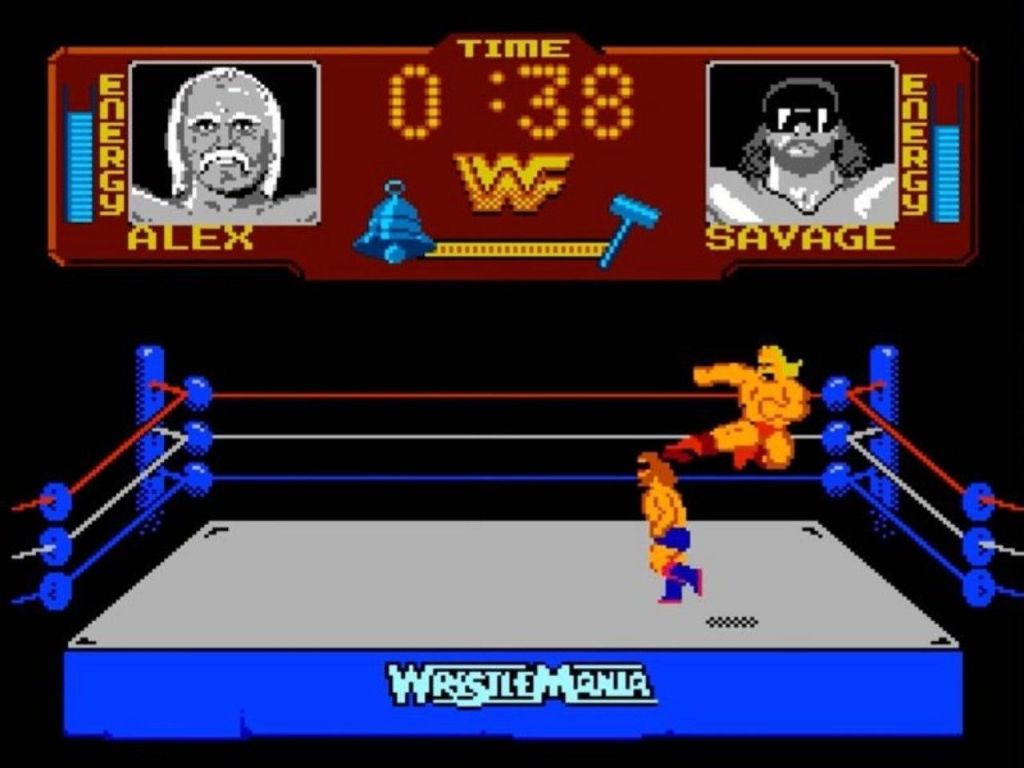
The music was repetitive, the wrestlers couldn’t leave the ring, and grappling was mostly non-existent. This digital representation, crafted by the folks at Rare during their incredibly busy early NES days, certainly lacked the nuance and spectacle of its real-life counterpart.
Bringing the WWF Home
WrestleMania on the NES was not a technical marvel. It wasn’t deep, it wasn’t particularly polished, and by today’s standards (or even the standards of later NES wrestling games), it feels rudimentary. Yet, judging it solely on its technical merits misses the point entirely. Its true value lies in its status as a tangible piece of 80s pop culture history. It was an interactive snapshot of the Hulkamania phenomenon, a direct line to the larger-than-life heroes and villains we idolized on television.
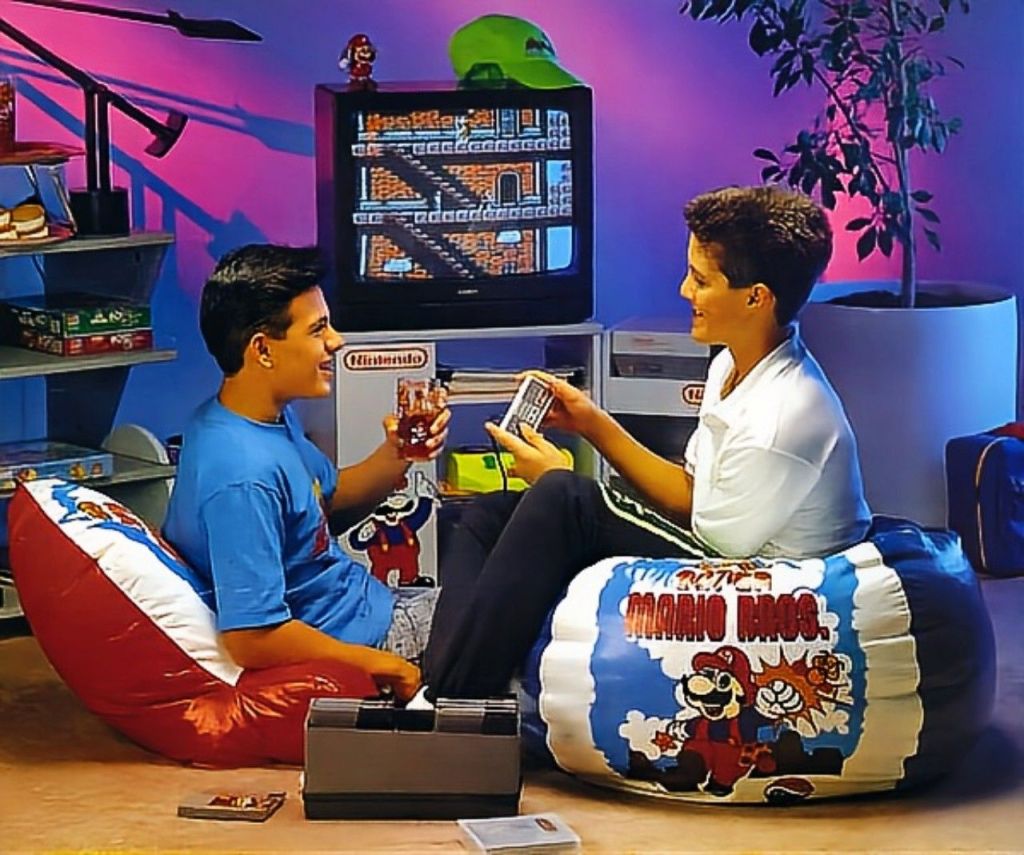
For kids growing up in that era, the WWF and the NES were two pillars of entertainment. This game, warts and all, was the bridge between those worlds. Holding that controller, staring at those pixelated representations of Savage and DiBiase, hearing that simple, looping music – it wasn’t just playing a game, it was participating, in our own small way, in the Golden Era of the WWF. The memories tied to it – the arguments over who got to be Hogan, the frustration of trying to land a finisher, the sheer joy of finally winning the pixelated championship belt – are as much a part of its legacy as the code on the cartridge. It may not have been “Bigger, Better, Badder” than the real thing, but for a generation of fans, it brought WrestleMania to our living rooms.
 PlayZine
Leave a comment