Summoned by Evil, Fueled by Blasphemy
Legend tells that once every hundred years, when the light of Christ falters in the shadow of evil, Castle Dracula rises from the depths, summoned by the prayers of the wicked. One Easter night, a century after Dracula’s defeat at the hands of Christopher Belmont, darkness stirred again while the people of Transylvania celebrated Christ’s resurrection with joy and song,
In the ruins of a forgotten monastery, a ritual unfolded. Blood of the living was spilled upon the remains of Dracula in a blasphemous black mass. Thunder roared, and the heavens split open as lightning crashed down upon the cursed site. From the swirling storm of black clouds, Count Dracula once again clawed his way back into the world. His power, stronger than ever, threatened to drown the land in eternal night.

But as the shadows crept from the castle’s gates, another force stirred. Simon Belmont, descendant of the famed Belmont clan, took up his family’s ancient whip, a weapon imbued with mysterious, holy power. Alone and undeterred, he marched toward the towering spires of Dracula’s castle, knowing full well the horrors that awaited within. With the forces of darkness rising, the weight of the Belmont legacy bore down on his shoulders. Yet, he knew his mission—to face the resurrected Count and drive him back into the abyss, no matter the cost.
A Whip and a Prayer
When Castlevania landed on the NES, it brought with it a unique blend of action-platforming and gothic horror. While many games of that era were known for their colorful worlds and lighthearted characters, Castlevania was different. It was dark, atmospheric, and challenging, making players feel like they were embarking on a perilous journey through Dracula’s castle, armed with nothing but a whip and a prayer.
As players ventured deeper into the game, the atmosphere grew ever more oppressive, with crumbling stone walls, eerie chandeliers, and haunting music that amplified the sense of dread. Even with the NES’s limited graphical power, Castlevania showcased an impressive level of artistry in each area, from ghostly catacombs to an intricate clocktower and finally to the towering spires against a stormy sky.
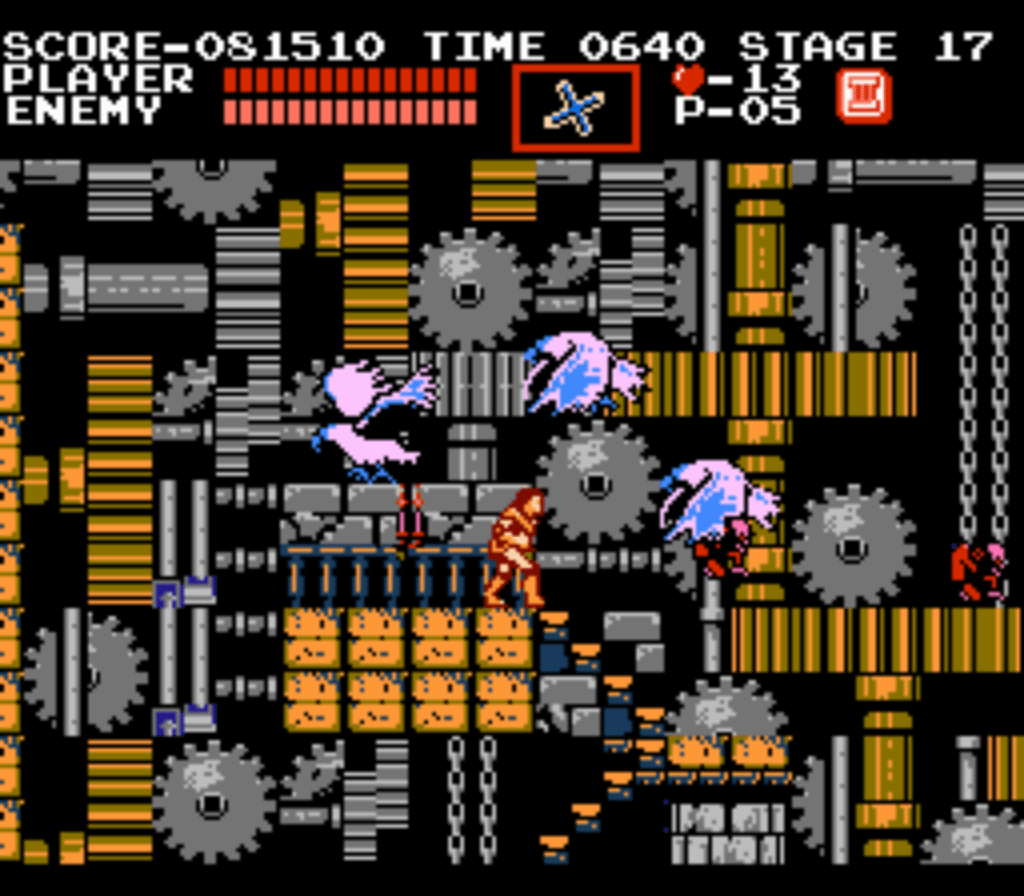
Every screen felt like a masterfully painted portrait pulled straight from the Gothic horror stories of our darkest legends. Where other games of the time relied on static, almost sterile environments, Castlevania created a world that felt alive, where each room added layers to the dark, foreboding atmosphere, pulling players deeper into Dracula’s haunting domain.
Symphony of the Strike
Castlevania’s combat stood out from most platformers seen up until till then, rewarding precision and patience instead of frantic button mashing. Each strike demanded careful timing, as Simon’s swing came with a slight delay, locking him into place for a split second and making every attack feel like a true commitment adding a layer of tension to each encounter. Players had to balance the whip’s short range with the need to always position Simon at just the right distance to keep him safe from any counterattacks. This made every attack, every room, every hallway, a strategic dance that required careful footwork and timing. This design choice, though subtle, made Castlevania feel like a darker, more dangerous world where only patience and precision could lead players to victory.
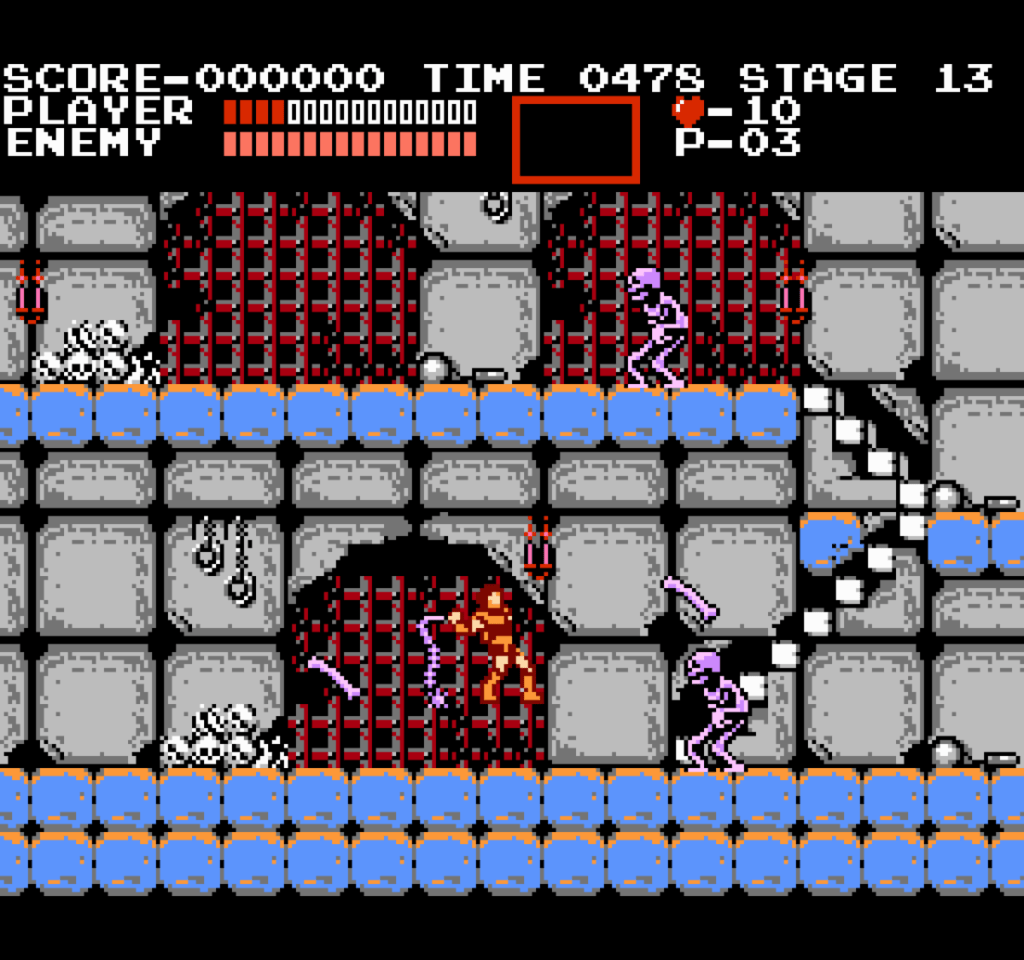
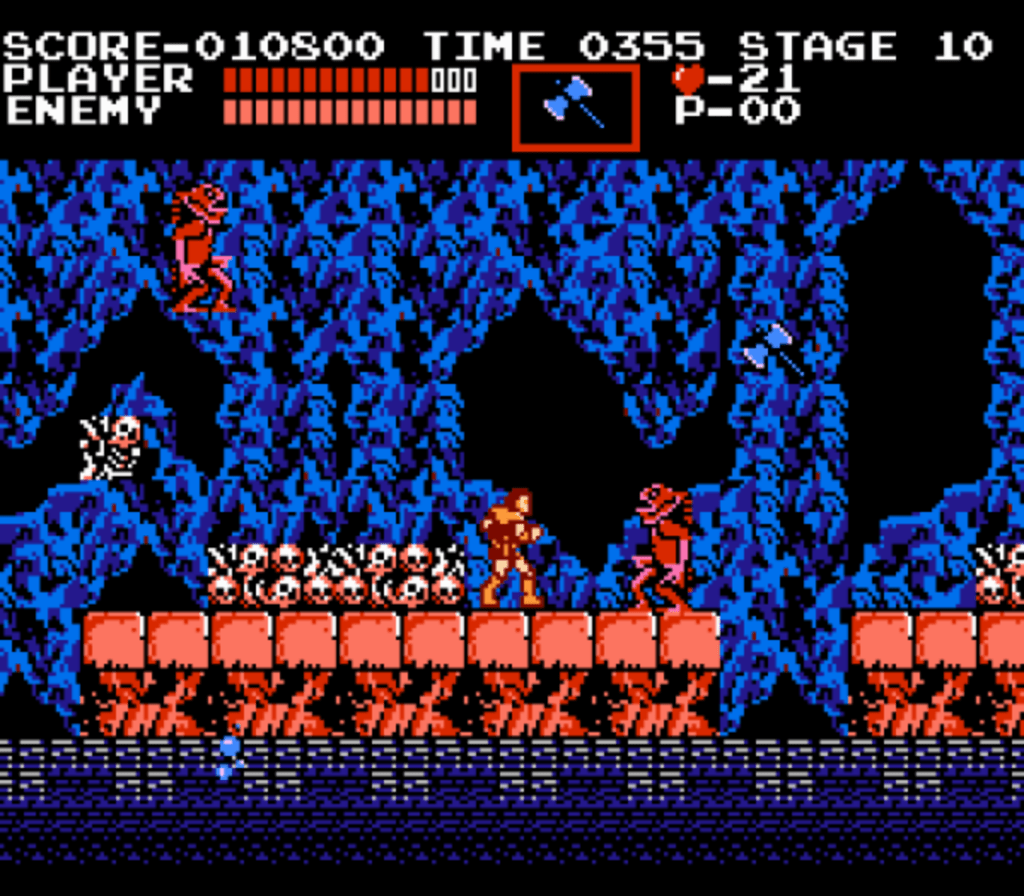
Secondary weapons also played a crucial role in giving players the extra edge they needed. Axes, holy water, daggers and crosses weren’t just for show—they each had a tactical purpose. The axe’s arc made it perfect for hitting enemies above Simon, while holy water could be thrown to create a deadly flame on the ground, locking enemies in place. The boomerang, with its ability to hit multiple enemies, became invaluable during some of the game’s more intense battles and the dagger was a weaker but faster weapon that could help clear out enemies from a distance. However, these secondary weapons were powered by hearts, meaning players had to manage their resources carefully, deciding when to unleash these powerful attacks and when to hold back. This strategic use of sub-weapons was never more critical than during the game’s boss fights, where Castlevania truly excelled.
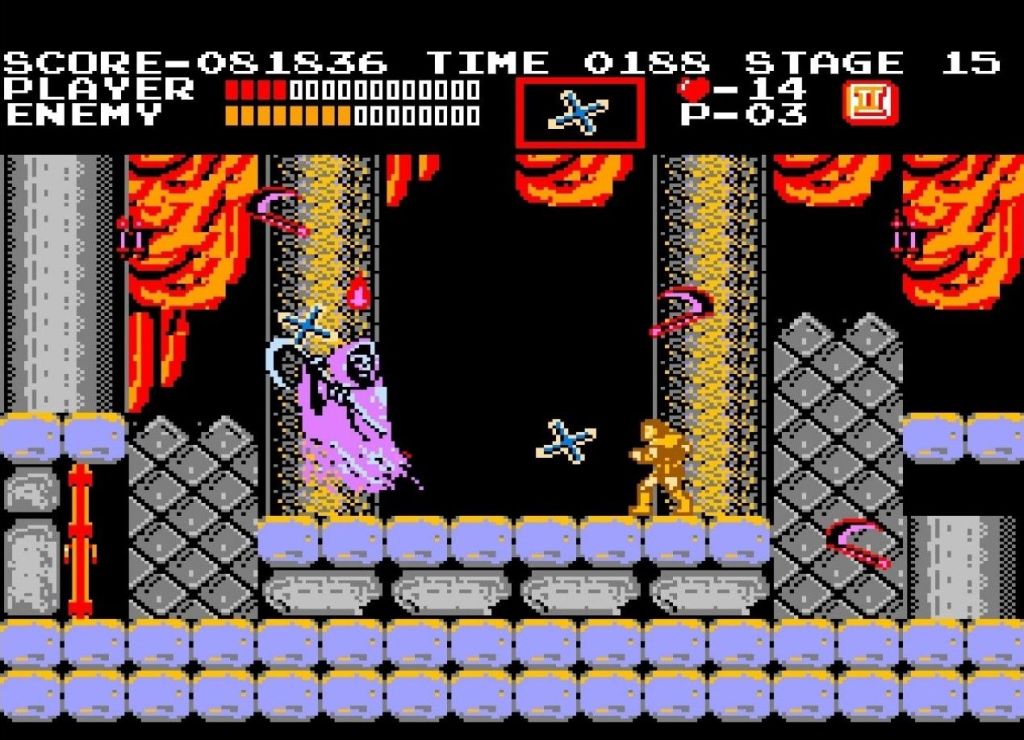
Each boss had its own set of attacks and required a different approach to defeat, often demanding the right combination of sub-weapons and tactics. Death, in particular, remains one of the most memorable bosses, not just for his design but for the sheer intensity of the battle. His scythes homed in on Simon, creating an almost overwhelming sense of chaos. But with the right sub-weapon and careful positioning, even this formidable foe could be beaten. Every victory in Castlevania felt earned, and that’s something few games from the era can truly claim.
This sense of progression is woven throughout the game, creating a feeling of constant growth and mastery. From collecting hearts to upgrade your whip and secondary weapons, to learning the nuances of each stage and boss, Castlevania made you feel stronger as the challenges grew more intense. It was this meticulous balance between challenge and reward that kept players coming back, eager to conquer the next stage, the next boss, the next seemingly insurmountable obstacle.
The Dawn of Castlevania’s Musical Legacy
Castlevania’s legendary soundtrack not only defined the mood of its gothic world but also laid the foundation for a franchise renowned for its music. From its earliest notes, Castlevania established a precedent for how soundtracks could elevate gaming, creating a soundscape that perfectly captured the tension and danger of Simon Belmont’s journey. Tracks like “Vampire Killer” and “Wicked Child” weren’t just background noise, they became essential companions, driving the player forward with their intensity and haunting beauty. This blend of gothic atmosphere and musical brilliance ensured Castlevania stood apart from other NES titles, leaving an indelible impression on players and setting the stage for what the series would become.
This initial masterpiece became the cornerstone of a series that would become synonymous with exceptional soundtracks. Castlevania’s music evolved with each entry, from the chip-tune brilliance of its early games to the orchestral grandeur of later titles like Symphony of the Night. Yet, the foundation laid by the original game’s soundtrack remained a touchstone, inspiring composers and fans alike. By prioritizing music as a key element of its storytelling, each melody echoed the difficulty and triumph that came with mastering the game, embedding itself in the memory of those who dared to brave Dracula’s castle.
Defeating Dracula’s Dark Reign
For many of us who grew up with the NES, Castlevania wasn’t just another game—it was an experience. It was a test of patience, skill, and determination. You couldn’t breeze through it. You had to earn every inch of progress, every victory over a boss, and every chance to inch closer to Dracula. The game was tough, but it was fair, and it never felt like it was cheating you. Instead, it taught you to get better, to understand its mechanics, and to adapt.

Even now, decades later, Castlevania holds up as a classic. It’s a game that shaped what action-platformers could be, and its legacy can still be felt in the games we play today. For those of us who remember tackling Dracula’s castle in the late ’80s, the memories are still vivid—the thrill of upgrading your whip, the tension of facing off against Death, and the triumph of finally defeating Dracula. Castlevania isn’t just a game—it’s a piece of gaming history, and for those who experienced it firsthand, it’s a memory that will never fade.
 PlayZine
Leave a comment