The Fall of the Video Game Industry
The early 80s were a golden age for video games. Arcades were filled with the lights and sound of Space Invaders, Pac-Man, and Donkey Kong and kids lined up with quarters, eager to beat high scores and conquer worlds. It felt like the future and when consoles like the Atari 2600 brought that magic home, it felt like video games would be around forever.

But the dream didn’t last as the video game crash of 1983 turned that excitement into disappointment and frustration. Suddenly, games weren’t fun anymore, they were everywhere and most of them were terrible. Bargain bins overflowed with cheap, unplayable, titles that felt more like scams than adventures. As the quality plummeted and the market became oversaturated, stores stopped stocking consoles, companies went out of business and the whole industry seemed to implode. For a kid who’d grown up with games it felt like the light had gone out. Video games weren’t cool anymore—they were a dead fad that left you clutching at memories of the good times.
Mario and the Return to Gaming’s Greatness
Then, under the tree one Christmas morning, the NES arrived—and there he was, Mario, ready to pull video games out of the ashes. This stubby, mustachioed plumber wasn’t the sleek hero we were used to seeing, but something about him grabbed your attention. Suddenly, the promise of amazing worlds, endless challenges and a quest to save a princess from a wicked turtle king felt like more than just another game—it felt like a lifeline, a way back into the magic we thought was gone forever. For those of us who’d watched the golden age of gaming crumble, seeing Mario for the first time was a revelation. This wasn’t the end, it was a new beginning. With Mario leading the way, we were ready to dive back into a world of imagination, adventure, and endless possibilities.
The Mario Fun Club
And then, as if it couldn’t get any better, a few weeks after that magical Christmas morning, the Nintendo Fun Club Newsletter landed in your mailbox. It was the power-up that unlocked the world of gaming for you. You already had Mario—your new favorite hero—but now you had the official word from Nintendo, a deeper look at this world you’d just begun to explore. The newsletter wasn’t just an advertisement, it felt like a letter from an old friend who understood how much you loved getting lost in the Mushroom Kingdom.
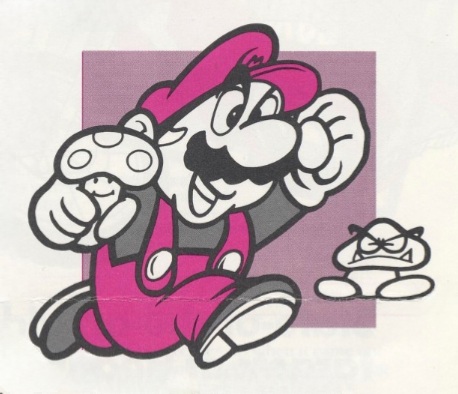
Reading through the pages, it warned you that the setting was stranger than any nightmare. Where a tribe of hideous turtles called the Koopas had turned the mushroom people into stones, bricks and dried up plants. It warned you of fire breathing dragons, man-eating plants, and cliffs of no return. It felt like a perfect reflection of what you’d experienced over the past few weeks, but somehow more epic. It wasn’t just a game anymore; it was a phenomenon, and you were caught up in it.
Seeing the artwork, hearing about the secrets you hadn’t discovered yet, and sharing tips on the playground only pulled you further into Mario’s unforgettable adventure. For the first time in years, video games were exciting again, and as you flipped through the newsletter, it hit you that this was just the beginning. Mario wasn’t just reigniting gaming for you and your friends, he was lighting a fire that would grow for the decades to come.
Jumping into the Mushroom Kingdom
When you turned on your NES, heard that iconic start-up sound and dove into the Mushroom Kingdom, you weren’t just playing a game, you were jumping into a new world that sprawled beyond the single-screen levels of yesteryear. There was more to discover just beyond the edge of the screen and was a taste of real freedom in gaming, a chance to explore, to leap, and to conquer. The controls were tight and responsive. Every jump, every dash, every slide down a flagpole felt just right.

The power-ups were another stroke of genius. The power-ups in Super Mario Bros. created a perfect sense of progression, taking you from small, vulnerable Mario—where every move felt risky—to tall Mario, where you suddenly had the ability to break blocks and explore the environments more fully. With the Fire Flower, you weren’t just surviving; you were turning the tables on the enemies, throwing fireballs. But the ultimate moment came with the Starman—invincible Mario, where for a brief, thrilling few seconds, you were untouchable, tearing through levels with no fear. It was a brilliant progression, from cautious to unstoppable.
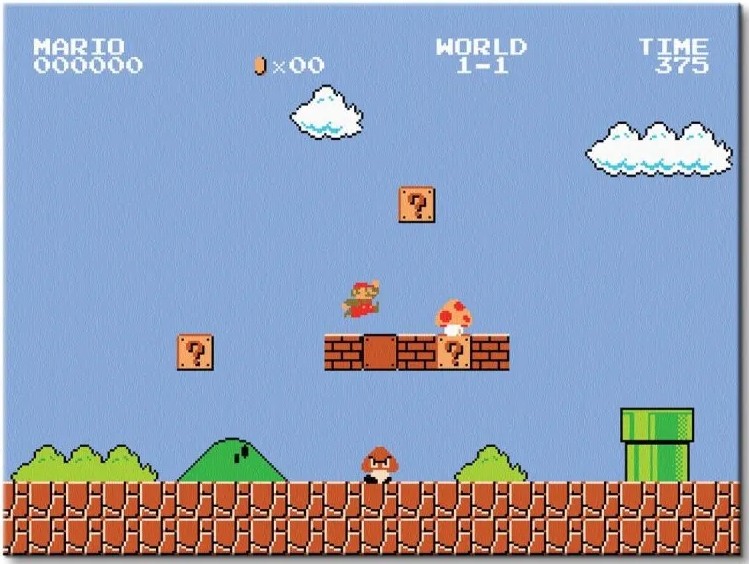
And then there was the music. Koji Kondo’s soundtrack didn’t just accompany the game; it elevated it. The cheerful, bouncy tunes of World 1-1 are ingrained in the memories of countless gamers. It’s the kind of music that transports you back to those childhood days when you’d sitting in front of the TV, controller in hand, determined to beat that level.
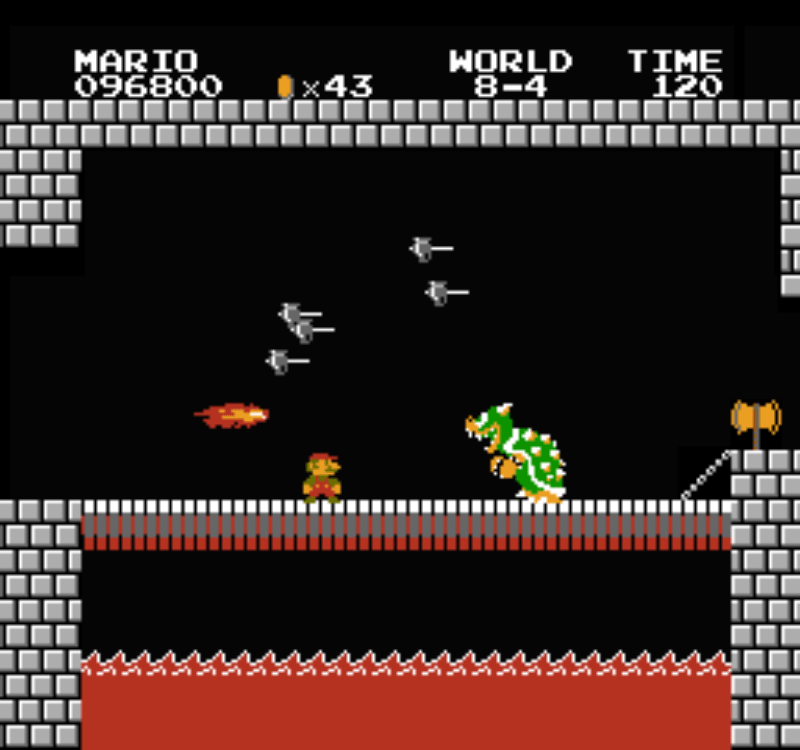
But Super Mario Bros. wasn’t just about bright, cheerful moments. Who can forget the tension of those underwater stages, with the haunting melody and the constant threat of the Blooper squids? Or the sheer panic of trying to outrun the clock, the music speeding up as the seconds ticked away? These moments made the victories even sweeter. When you finally toppled Bowser into that lava, you weren’t just finishing a game—you were achieving something great.
The Plumber that Changed Gaming Forever
Beyond its gameplay, Super Mario Bros. played a crucial role in changing the way we viewed video games. Before Mario, games were often seen as repetitive, one-dimensional experiences. But here was a title that offered variety, challenge, and a real sense of progression. Every level introduced something new, whether it was a tricky platforming section, a hidden 1-Up, or an encounter with a Hammer Bro. The game respected the player, pushing them to get better, to keep exploring, to never give up.
Reflecting on Super Mario Bros. now, it’s easy to see why it’s stood the test of time. It wasn’t just a game—it was a gateway into a world of imagination. For many, it was their first introduction to the joy of exploration, the thrill of discovery, and the satisfaction of overcoming a challenge. It showed us that video games could be more than just pixels on a screen—they could be experiences that stayed with you long after you turned off the console.
Super Mario Bros. didn’t just revive the gaming industry—it reminded us all why we love to play. It’s a journey that started with a leap of faith, a jump into an unknown world, and all these years later, it’s still the adventure of a lifetime.

 PlayZine
Leave a comment